

Import, distribution, and installation system for vinyl flooring, laminate flooring, sheet vinyl, and carpets
Are you sure the anti-static vinyl flooring in your factory is still functioning correctly? Even a small deviation in conductivity can damage electronic components, cause hidden discharges, or even lead to explosions – risks that are difficult to detect but can cause significant damage.
Regularly testing the anti-static capabilities of ESD flooring not only helps maintain the safety and stability of the production environment but is also a mandatory requirement in international standards. In this article, Thien Ha Floor will share 3 globally recognized anti-static testing methods – helping you quickly self-assess, detect deviations early, and ensure your ESD flooring system operates correctly.
During the evaluation of ESD vinyl flooring's anti-static effectiveness, adherence to international measurement standards is mandatory. These standards ensure high accuracy, comparable results, and wide applicability.
Some common standards include:
ANSI/ESD STM7.1 - Specifies methods for measuring surface resistance and Resistance-to-Ground for anti-static flooring. This is the most widely used standard in electronics factories, cleanrooms, and data centers.
IEC 61340-4-1 - An international standard equivalent to ANSI/ESD STM7.1, commonly adopted by factories in Europe, Japan, and South Korea. It guides test methods for conductive and static dissipative flooring, including environmental conditions, measuring equipment, and acceptable resistance limits.
ASTM F150 - A US standard used to measure volume resistance, assessing the material's ability to conduct electricity through its thickness, reflecting the flooring's internal conductivity.
Key concepts to understand:
Surface Resistance: The resistance of the flooring's outermost layer – where people and equipment make direct contact. This value indicates how quickly the floor can dissipate static charge.
Volume Resistance: The resistance measured through the entire flooring material, indicating its internal conductivity and how it transfers charge to the grounding system.
Static Voltage: The voltage generated by static charge buildup on the surface. Testing this value helps determine if the flooring prevents sudden electrostatic discharge (ESD).

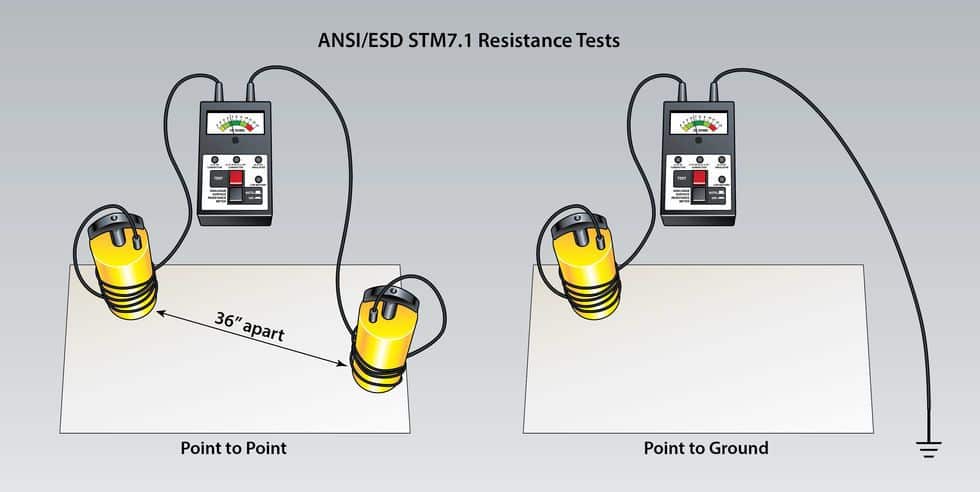
The Surface Resistance Test is a procedure for measuring the resistivity on the surface of a material.
– Purpose: To determine if the floor surface has sufficient conductivity to safely dissipate static electricity.
There are two types of anti-static vinyl flooring:
Conductive: Low surface resistance, allowing current to flow easily.
Static Dissipative: Moderate resistance, allowing static electricity to dissipate slowly and in a controlled manner.
– Equipment: Surface resistance meter and two standard 2.27 kg electrodes (per ANSI/ESD STM7.1).
– How to perform:
Resistance Point-to-Point: Place two electrodes a specific distance apart on the same surface. Current will flow between the electrodes, and the meter will measure the resistance.
Clean the floor surface, ensuring it is dry.
Place two electrodes 1m apart in the area to be measured.
Connect the equipment, measure, and record the average value.
Resistance-to-Ground: One electrode is placed on the surface, and the other is connected to the grounding system. This measurement determines the floor's ability to dissipate static electricity from the surface to the ground.
– Standard values:
Conductive floor: 10⁴ - 10⁶ Ω (Reference Standards: ANSI/ESD STM7.1, IEC 61340-4-1)
Static Dissipative floor: 10⁶ - 10⁹ Ω (Reference Standards: ANSI/ESD STM7.1, ASTM F150)
– Notes:
A damp or dusty surface can lead to inaccurate results.
Multiple measurements should be taken at different locations on the surface for a comprehensive and accurate assessment.
It is recommended to perform measurements under conditions of 23 ± 2 °C temperature and 50 ± 5% humidity (per ANSI/ESD STM7.1).
>> See more: Distinguishing between Conductive and Static Dissipative Anti-Static Vinyl Flooring
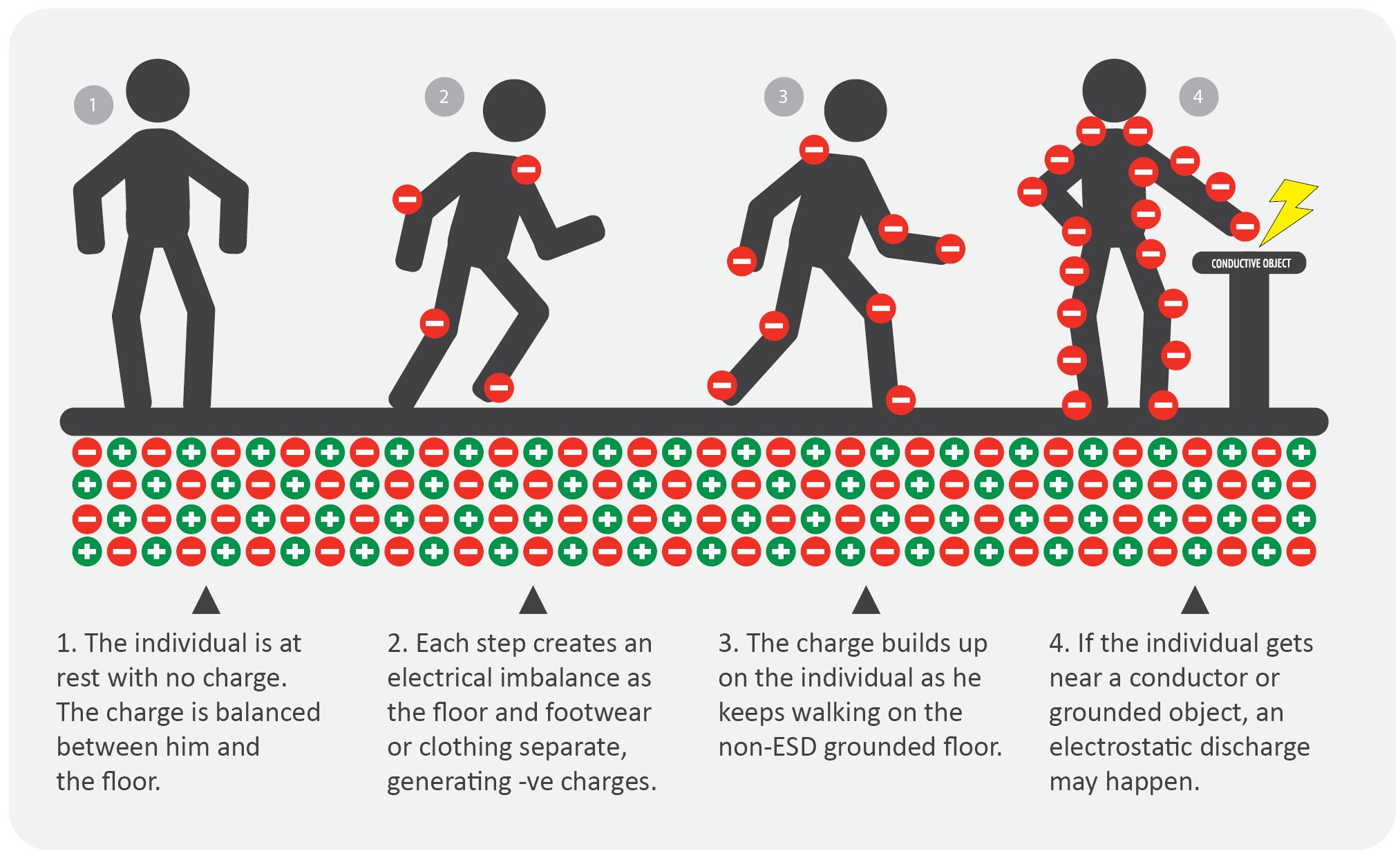
The Static Voltage Test is a procedure for measuring the amount of static charge accumulated on a person or object as they move within an electrostatic discharge (ESD) controlled area. This method is also known as the “Walking Body Voltage Test” and is one of the most critical tests to evaluate the actual effectiveness of an anti-static flooring system and ESD footwear.
Purpose: To measure the amount of static electricity generated under actual operating conditions, simulating worker movement in a factory. International standards such as ANSI/ESD S20.20 require this test to certify ESD flooring systems.
Equipment: Static Field Meter or a specialized ESD Test Kit.
How to perform:
The tester walks on the floor wearing ESD shoes. Continuously measure the static voltage on the person's body while moving. The measured values (usually the average of the highest peaks) are analyzed to determine the system's effectiveness.
Standard value: Static Voltage ≤ 100V is considered safe according to international ESD standards (ANSI/ESD S20.20).
Significance: The results of the Static Voltage Test are crucial because they reflect the actual static control capability of the flooring system under operating conditions. An anti-static vinyl flooring system may meet resistance requirements but still generate high static voltage due to friction, posing a risk to sensitive electronic components. Therefore, the static voltage test is the final and most important step to confirm that the ESD system is operating effectively.
Each testing method plays a different role in evaluating the performance of anti-static vinyl flooring. Combining these two methods allows businesses to comprehensively assess if the anti-static vinyl flooring is installed correctly and meets technical standards.
Testing Method | Main Purpose | When to Use |
Surface Resistance Test | Determine the surface conductivity of ESD flooring | Periodic testing of the entire in-use floor area |
Static Voltage Test | Measure charge control capability when people or objects move | Verify ESD effectiveness in actual operating environments after installation |
Compare the results of both tests against the established standards.
Generate a detailed acceptance report, recording measurement results, environmental conditions (temperature, humidity), equipment used, and the person performing the test.
Save the records as an "ESD Measurement Report" for periodic evaluations or quality certification.
No matter how high the quality of anti-static vinyl flooring, if not tested periodically, its conductivity will gradually decrease over time due to factors like accumulated dirt, wear, or peeling coatings. This directly affects static control effectiveness and operational safety in the factory.
Therefore, periodic testing of ESD flooring's anti-static capabilities is an essential step to detect potential issues early and extend the floor's lifespan.
Acceptance: The first test after installation is necessary to verify that the installation meets initial technical standards.
Reference Data: These initial test results form the baseline data for comparison and performance monitoring in subsequent tests.
After Installation: Conduct the first test before project handover. The measurement results should be included in the acceptance records as a basis for comparison in future tests.
The frequency of periodic testing depends on the risk level of each area.
Every 6 months for high-tech equipment manufacturing plants, cleanrooms, data centers, etc. Some highly regulated facilities may require more frequent testing, quarterly or monthly, depending on internal risk assessments.
Every 12 months for laboratories, medical facilities, or areas with lower risk or less wear.
If there are fluctuations in temperature or humidity, floor repairs, or changes to the grounding system, re-testing is necessary to ensure the floor still operates within the standard resistance range.
Additionally, Thien Ha Floor recommends reapplying a specialized anti-static wax coating every 6-12 months (depending on traffic and area needs) to maintain conductivity and enhance floor durability.
>> See more anti-static flooring accessories

During ESD flooring measurements, several common errors can occur, affecting the results and the assessment of anti-static capabilities. Below is a summary of common errors, their causes, and solutions:
Error | Cause | Solution |
Resistance Exceeds Standard | Floor not properly grounded | Re-check the entire copper wiring and grounding system; ensure continuous and secure connections |
Large Fluctuations in Measurement Results | Temperature and humidity do not meet requirements | Re-measure when environmental conditions meet standards: 23 ± 2°C, 50 ± 5% RH |
Inaccurate Measuring Equipment | Measuring instruments not calibrated or used incorrectly | Send equipment for periodic calibration; strictly follow the manufacturer's measurement instructions |
With over 12 years of experience in importing, distributing, and installing anti-static vinyl flooring, Thien Ha Floor is one of the leading pioneers in Vietnam providing comprehensive ESD anti-static flooring solutions for environments requiring strict static control, such as:
Electronics and semiconductor manufacturing plants
Cleanrooms
Data centers, server rooms
Pharmaceutical and medical equipment factories
Why choose Thien Ha Floor?
Genuine Products - Full Documentation: Thien Ha Floor commits to providing genuine anti-static vinyl flooring, directly imported from reputable global brands like Jinhai, IBT, LG Hausys, ESD Work, etc. All products come with clear CO, CQ, and technical certificates. Furthermore, Thien Ha Floor continuously updates with the latest color codes and advanced technologies for its customers.
Transparent and Competitive Pricing: We provide detailed quotes with no hidden costs beyond the contract, focusing on delivering value and actual benefits to our clients.
Technically Sound Installation: for both Conductive and Static Dissipative flooring lines, meeting the most stringent requirements. We understand the specific characteristics of each industry and know how to meticulously handle every technical detail, ensuring timely, accurate, and effective execution.
Highly Professional Team: offering in-depth consultation to select the most suitable flooring based on the operating environment and usage frequency, optimizing costs while ensuring maximum performance and durability.
Long-Term Warranty and Dedicated After-Sales Service: After project handover, we provide documentation on resistance testing, proper cleaning & maintenance methods for ESD flooring, helping businesses maintain stable anti-static performance over time.
Contact Hotline 0909 192 557 for detailed consultation and a quote for comprehensive anti-static vinyl flooring installation.


![PVC Wall and Ceiling Panel Price List [2026]](https://cdn.thienhafloor.vn/2025/08/tam-nhua-op-tuong-pvc-5__w1200.avif)


![PVC Wall and Ceiling Panel Price List [2026]](https://cdn.thienhafloor.vn/2025/08/tam-nhua-op-tuong-pvc-5__w320.avif)
