

Import, distribution, and installation system for vinyl flooring, laminate flooring, sheet vinyl, and carpets
Anti-static flooring (English name: Electrostatic Discharge flooring, abbreviated as ESD) is a flooring system designed to prevent the sudden buildup and discharge of static electricity.
On ordinary floors (such as carpets or vinyl floors), walking creates friction, causing static electricity to build up on your body. When you touch a conductive object, this charge will "jump" to that object, creating a spark. While this usually only causes mild discomfort to humans, this spark can destroy sensitive electronic equipment, ignite flammable gases, or disrupt high-precision devices.
To control and eliminate this phenomenon, businesses often apply various solutions. Among them, using anti-static flooring is the most common choice, and has become a mandatory requirement in electronics assembly plants, cleanrooms, data centers, etc.
So, what is anti-static flooring? What are the types, and how do you choose? Let's find out with Thien Ha Floor in the article below!
ESD anti-static flooring is a specialized floor covering solution made from materials capable of conducting electricity and controlling static charges on the surface. The main function of this type of flooring is to prevent static buildup and control discharge by safely transferring excess charge to the grounding system. Thanks to this mechanism, ESD flooring helps protect sensitive electronic equipment, minimize the risk of component damage, data loss, and fire or explosion hazards in production environments.
Currently, anti-static flooring is widely used in hospitals, cleanrooms, electronics factories, server rooms... requiring strict static control. Among these, anti-static vinyl flooring is the most popular type.
Anti-static flooring operates on the principle of controlled, conductive, and dissipative static charge management to prevent sudden discharges that affect equipment and the work environment.
The mechanism of anti-static flooring can be summarized by the cycle:
Charge Control → Charge Conduction → Safe Grounding

During operation, static electricity is generated continuously due to friction between people, footwear, equipment, and the floor surface. Unlike ordinary insulating materials, ESD flooring is designed with a defined surface resistance range (typically from 10⁵ to 10⁹ ohms), allowing control over the static charge buildup level.
Thanks to this characteristic, charges are not retained on the floor surface at dangerous levels, thereby minimizing the risk of static discharge.
Anti-static flooring materials are composed of conductive materials such as:
Carbon particles or fibers
Conductive additives
Conductive or dissipative underlayer
These components form a continuous conductive network, allowing charges to move from the floor surface to the layers below. For anti-static vinyl flooring, the conductive capability is integrated directly into the material structure, ensuring stable and uniform performance across the entire floor area.
The entire anti-static flooring system is connected to the grounding system through components such as:
Copper grid
Grounding wire
Specialized conductive adhesive
Charges, after being conducted and dissipated, are further transferred to the ground, completing the static control cycle. This is a mandatory element to ensure the ESD system operates effectively according to international technical standards.
Anti-static flooring helps dissipate static electricity gradually (controlled dissipation) rather than sudden discharge. As a result, the production environment remains stable and safe for both machinery and personnel.
In practice, this type of flooring offers several important benefits:
Preventing sudden electrostatic discharge (ESD) – which can permanently damage sensitive electronic components like chips, motherboards, hard drives, and other semiconductor devices, reduce their lifespan, or cause functional errors.
Minimizing the risk of fire and explosion in environments with flammable chemicals, solvents, or fine dust.
Eliminating the risk of workers experiencing mild electric shocks from contact with charged objects.
Maintaining stable production conditions, reducing the reject rate and saving costs on repairs or replacements. Especially in cleanrooms, electronics factories, and pharmaceutical facilities.
Installing ESD flooring is mandatory according to international management system regulations in specialized industries such as electronics, aerospace, healthcare, and military (e.g., the ANSI/ESD S20.20 standard related to ESD control).
With over 12 years of experience in the industry, Thien Ha Floor believes that using anti-static flooring in factories is not just about meeting technical requirements, but also a long-term investment solution that helps businesses minimize risks and significantly save on equipment maintenance costs.
In the market, there are many types of anti-static flooring suitable for specific environments, classified based on various criteria such as material, installation method, or level of static protection.
There are 4 most common types of anti-static flooring: anti-static vinyl flooring, anti-static raised access flooring, anti-static rubber matting, and anti-static epoxy coating.

Anti-static vinyl flooring is the most popular type of anti-static flooring, made from PVC combined with conductive particles or carbon fibers to prevent static electricity. The product has a protective surface coating to increase durability and wear resistance. The flooring can be in tile or sheet form.
Key Features
Easy installation: can be glued directly onto concrete or other subfloors.
Diverse in designs and colors: suitable for various aesthetic requirements.
Good resistance to common chemicals
Easy to clean and maintain.
Provides stable anti-static performance within the required resistance range.
Advantages
Relatively low initial investment cost.
Easy installation and maintenance.
Good chemical resistance.
High durability, can withstand moderate loads.
Diverse designs and thicknesses.
Disadvantages
Conductive properties may decrease in high humidity conditions.
The floor can deform or shrink if the quality is poor or installation is incorrect.
Requires meticulous work at the seams; otherwise, water can seep in, reducing the anti-static effect.
Common Applications: Lower-grade cleanrooms, electronics component manufacturing plants, laboratories, computer rooms, offices, assembly areas.

Anti-static raised access floor is the most premium anti-static flooring solution, consisting of floor panels placed on a system of metal pedestals. The space underneath is used for cables, conduits, or air conditioning systems – very convenient for machine rooms, data centers, or high-tech factories.
The anti-static raised access floor system includes:
Floor panels: common size 60x60 cm, with a core of cement, wood fiber, or steel. The top surface is covered with anti-static material such as HPL or vinyl.
Pedestals & stringers: metal frames (made of galvanized steel or aluminum) that support the floor panels, adjustable in height. They also help conduct static charges from the floor panels to the ground.
Grounding system: connects the entire floor and support frame to the grounding system with specialized wires, helping to dissipate static electricity quickly and safely.
Advantages
Efficient infrastructure management: the space underneath allows for easy routing and maintenance of electrical, network, plumbing, and gas lines.
Can withstand heavy machinery and equipment.
Easy to disassemble and repair: individual floor panels can be lifted for inspection or replacement.
Flexible: easy to reconfigure when upgrading or adding equipment.
Improved cooling efficiency: enhances airflow, especially beneficial for server rooms or data centers.
Disadvantages
Highest initial investment cost.
Longer installation time, requiring more complex construction techniques.
Dust can accumulate in the gap between the raised floor and the concrete floor if not cleaned regularly.
Common Applications: Data Centers, Server Rooms, control rooms, high-end laboratories, cleanrooms requiring underfloor infrastructure management.

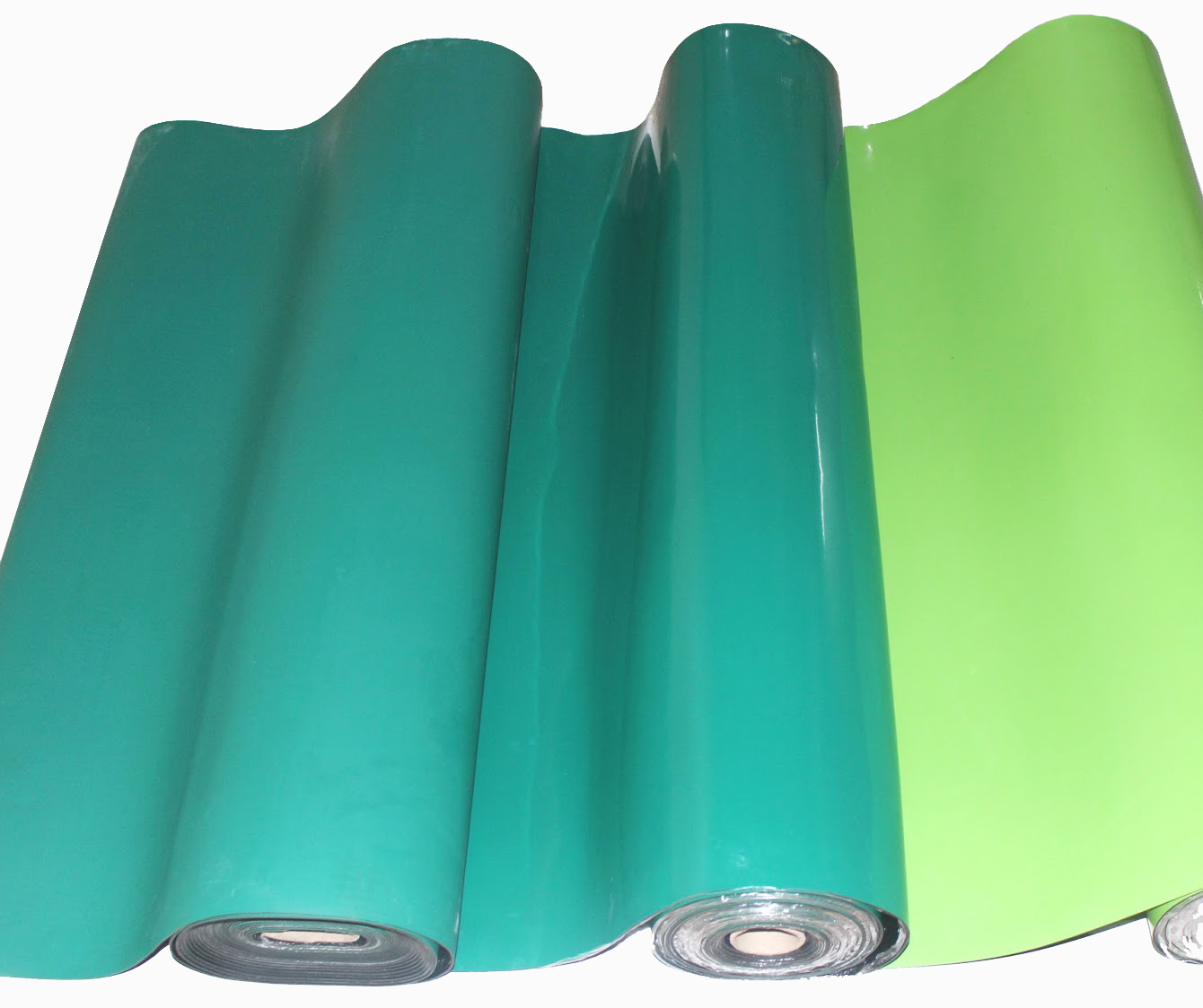
Anti-static rubber mats are typically used as floor coverings or mats in areas requiring localized static control. The product is made from natural rubber or synthetic rubber (NBR, SBR, EPDM), mixed with carbon black or conductive polymers. The mats usually have a two-layer structure: the top layer is anti-static, and the bottom layer provides grip or insulation.
Advantages
Affordable for localized areas.
Increases user comfort and safety (anti-fatigue, anti-slip).
Flexible & easy to install: can be laid directly, no fixed gluing required.
Easy to replace, low cost: convenient for maintenance.
Instant effect: provides localized anti-static protection immediately upon use.
Disadvantages
Lower durability compared to fixed epoxy or vinyl flooring.
Prone to shifting or curling if not securely fastened.
Limited color and design options.
Only provides localized protection, does not cover the entire floor.
Requires proper grounding to ensure anti-static performance.
Common Applications: Anti-static workbenches, localized workstations, electronic repair stations, product inspection areas, temporary walkways in factories.
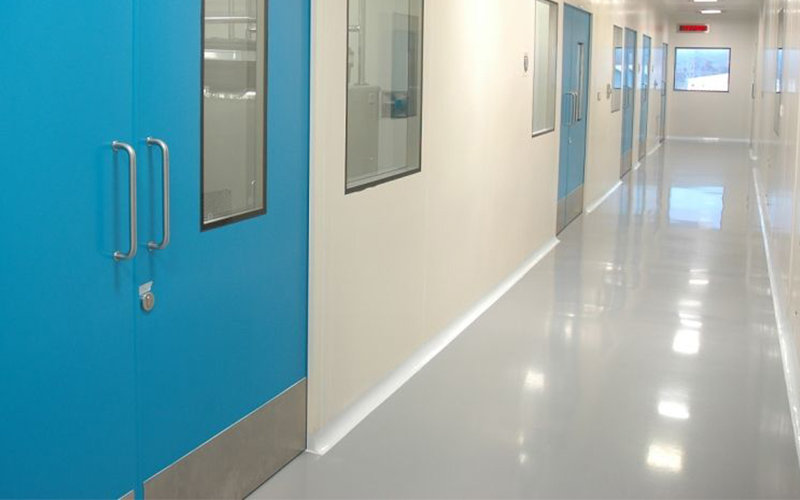
Anti-static epoxy coating is a multi-layer coating system applied directly to concrete floors, creating a seamless, durable, and easy-to-clean surface while helping to dissipate or conduct static electricity. The main component is epoxy resin mixed with conductive materials such as carbon fibers, metal powders, or graphite.
Advantages
Seamless surface, no gaps, easy to clean and prevents dust and bacteria buildup.
Extremely high mechanical and chemical durability, resistant to abrasion, impact, and heavy loads.
Stable anti-static performance, maintaining surface resistance within the required dissipative or conductive range.
Low maintenance required.
Flexible customization of thickness and color.
Disadvantages
Higher initial investment cost than vinyl flooring.
Extended installation time, requires site preparation and waiting for layers to dry completely before proceeding.
Requires high technical expertise and a professional installation team.
Difficult to repair locally when damaged, often requiring re-application of the entire area.
Can be slippery when wet or oily (anti-slip additives can be used to improve this).
Common Applications: Semiconductor manufacturing plants, pharmaceutical factories, hospitals (operating rooms), chemical storage, electronics component manufacturing plants with high demands for durability and hygiene.
To choose the appropriate type of anti-static flooring, you need to consider the following 4 technical factors:
First, you need to clarify whether the usage area requires ESD dissipative or ESD conductive properties?
Dissipative flooring is suitable for environments that require moderate ESD control.
Conductive flooring is used in highly sensitive environments where protection of electronic components, devices, or flammable chemicals is necessary.
Note: The Surface Resistivity (RTT) is a crucial technical parameter. Do not choose flooring just because it is labeled "anti-static".
>> See more: Distinguishing Between Conductive and Static Dissipative Anti-Static Vinyl Flooring
The installation environment directly affects the performance and lifespan of anti-static flooring. Here is a reference table for suitable flooring types for different environments:
Environmental Conditions | Recommended Anti-Static Flooring Type |
|---|---|
Dry, low humidity environment | Anti-static vinyl flooring |
Humid environment, moderate high humidity | Anti-static epoxy coating |
Exposure to chemicals, solvents | ESD vinyl flooring or ESD epoxy coating |
Areas with heavy loads, frequent forklift traffic | Anti-static epoxy coating |
Server rooms, data centers | Raised access flooring |
Small, temporary areas or where floor replacement is not feasible | Anti-static mat (ESD mat) |
Environment with high or fluctuating temperatures | Heat-resistant epoxy or vinyl anti-static flooring |
Anti-static vinyl flooring is the most popular choice today due to its simple installation process and reasonable cost. Meanwhile, epoxy coatings or raised access flooring have higher costs and more complex installation.
Additionally, you need to consider periodic maintenance costs, as each type of flooring has different requirements, and its anti-static effectiveness may decrease over time if not properly inspected and maintained.
Some industries such as electronics, telecommunications, defense, and healthcare have strict regulations regarding static control. Therefore, ensure that the anti-static flooring is certified according to international standards such as: ANSI/ESD S20.20, IEC 61340-5-1, or ISO 14644 (for cleanrooms).
Consult Experts: If you are unsure about the appropriate type of anti-static flooring, contact reputable suppliers like Thien Ha Floor for specific advice tailored to your situation.
Choose Professional Installers: Installing anti-static flooring requires high technical expertise, especially for the grounding part. An experienced installation team will ensure the system operates effectively.
Inspect Products Before Purchase: Ensure the flooring has all safety certifications and complies with stringent safety standards.
Thien Ha Floor – a supplier, consultant, and installer of anti-static vinyl flooring with over 12 years of experience. With a skilled and well-trained installation team, we are committed to delivering construction quality that meets technical standards, ensuring optimal safety and efficiency for our customers.
Currently, Thien Ha Floor offers a diverse range of high-end anti-static vinyl flooring, directly imported from reputable brands such as ESD Work, LG Hausys, etc., with long-term warranty policies.


![PVC Wall and Ceiling Panel Price List [2026]](https://cdn.thienhafloor.vn/2025/08/tam-nhua-op-tuong-pvc-5__w1200.avif)


![PVC Wall and Ceiling Panel Price List [2026]](https://cdn.thienhafloor.vn/2025/08/tam-nhua-op-tuong-pvc-5__w320.avif)
